
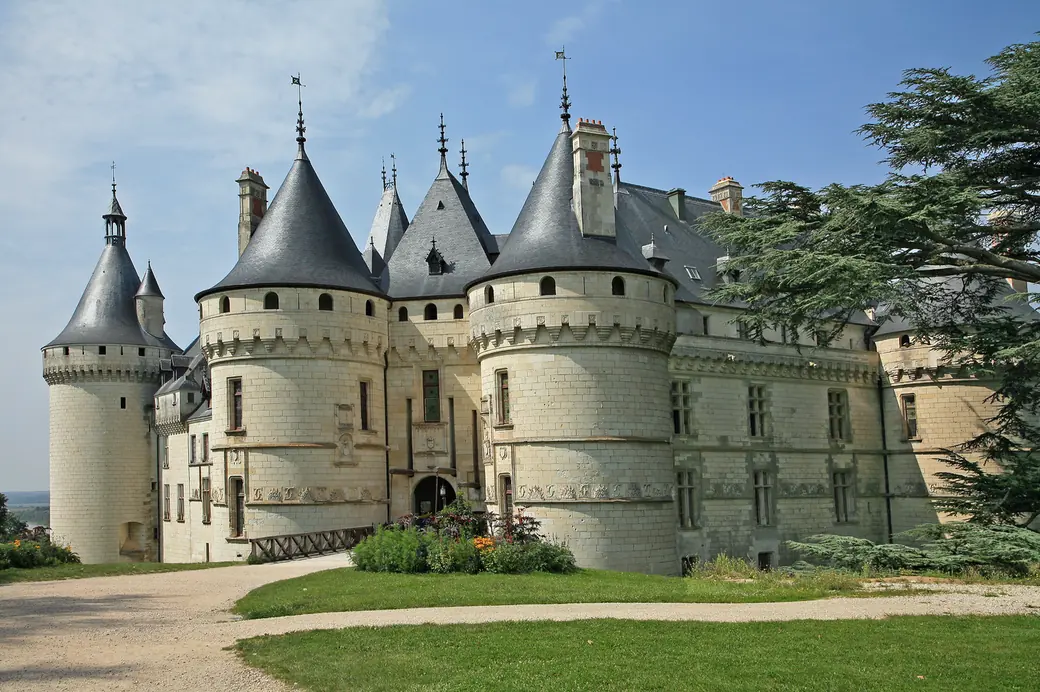
Rising on a sheer limestone bluff forty meters above a broad curve of the Loire River, Château de Chaumont-sur-Loire plays a different game from every other royal estate between Blois and Amboise. You come here as much for bold contemporary landscape art as for 16th-century court drama.
Most visitors first recognize the drawbridge flanked by two stout medieval towers. Walk past the gatehouse, though, and the fortress opens straight onto a bright Renaissance terrace overlooking miles of silver river sandbars. Few spots in the valley frame the Loire itself so dramatically from a single stone parapet.
Essential Logistics & Takeaways
- Two-Season Pricing: Festival Season (April 22 to November 1) costs €21.00 (~$22.70) adult, €13.00 (~$14.05) reduced, €6.00 (~$6.50) child aged 6-11, and €42.00 (~$45.35) for a 2+2 family. Winter off-season drops to €16.00 (~$17.30) adult and €4.00 (~$4.30) child.
- Free Categories: Children under 6 and visitors with disabilities enter free year-round.
- Strict 1-Hour Cutoff: Open daily from 10:00 AM (closed January 1 and December 25), closing at 5:30 PM in winter and 7:00 PM-8:00 PM in summer. Ticket desks always shut 1 hour prior to closing.
- Car, Train & Bike Friendly: Free village/estate parking, TER trains to Onzain, Chaumont-sur-Loire (2-2.5 km uphill walk), seasonal Azalys shuttle from Blois (€3.40 (~$3.70)), and direct La Loire à Vélo access.
Diane de Poitiers vs Catherine de’ Medici: A Royal Revenge Trade
Chaumont’s best historical story didn’t happen on a battlefield, it happened over a forced real-estate swap in 1559. Nine years earlier, Queen Catherine de’ Medici had purchased Chaumont-sur-Loire, drawn to its fortified bluff and quiet isolation, while her husband King Henri II lavished his favorite, Diane de Poitiers, with the river-spanning prize of Château de Chenonceau.
Then Henri II died after a jousting accident in Paris. Catherine suddenly held the regency and moved fast. She forced Diane to surrender Chenonceau and handed her Chaumont-sur-Loire in exchange. Diane didn’t stay long before retiring elsewhere, leaving Chaumont with one of the sharpest real-estate footnotes in French royal rivalry. Notice the carved architectural frieze bands wrapping the exterior stonework: intertwined C’s for Catherine, D’s and crescent moons for Diane, and blazing mountain emblems (chaud mont) linked to the Amboise family who rebuilt the fortress in the late 15th century.
Three centuries later, the château took on a very different personality under its final private owner, Princesse de Broglie (née Marie Say, heiress to a sugar fortune). During the Belle Époque, she fitted the rooms with luxurious historicist furnishings, hosted kings and maharajas, and expanded the sweeping English landscape park overlooking the valley. Her wealth also funded state-of-the-art heated stables that still look remarkably modern today. When financial ruin hit the household in 1938, the estate passed to the French State, clearing the path for its modern dual identity as a historic monument and contemporary arts domain.
Inside the Château, Belle Époque Stables & Art Galleries
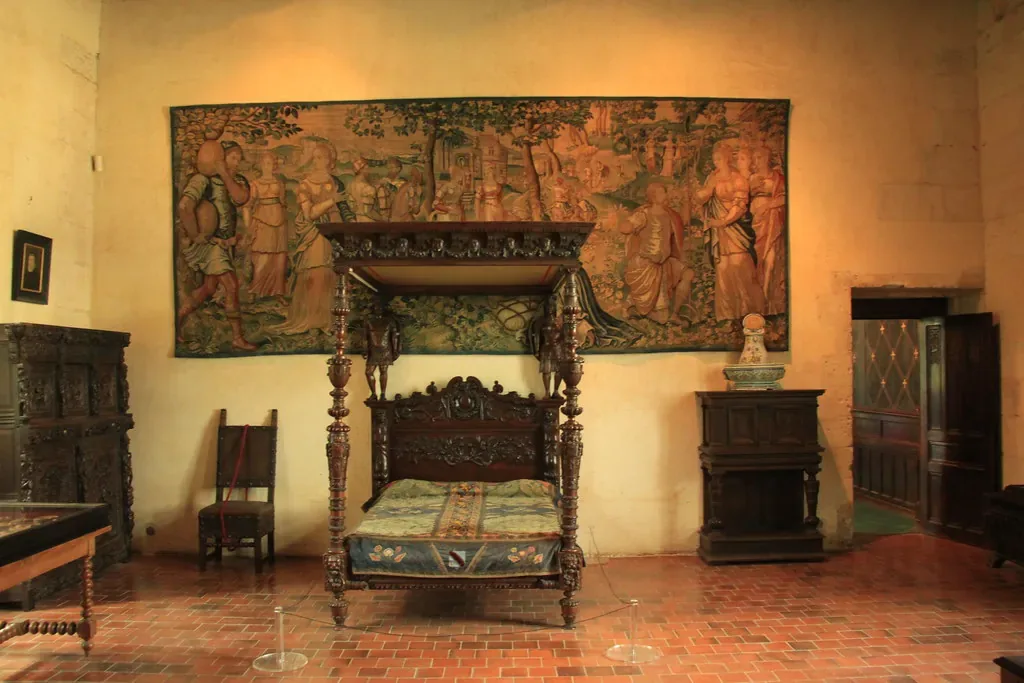
Don’t rush past the interior rooms on your way to the park. While Chaumont’s historic apartments feel darker and more romantic than Cheverny’s bright 17th-century salons, the contrast between carved Renaissance woodwork, heavy woven tapestries, and contemporary installations tucked into attic lofts and outbuildings gives the visit real texture.
Start in the ground-floor and first-floor state rooms, where tiled corridors open into oak-paneled chambers, Catherine de’ Medici’s historic reception spaces, and Princesse de Broglie’s formal dining room. From the river-facing terrace, step across to the Belle Époque Stables (Écuries). Stepping inside feels like touring a gilded 19th-century luxury garage: wrought-iron stall grilles, pristine brass-trimmed harnesses, and patterned tiled floors built for prized carriage horses. Alongside the historic rooms, the Center for Arts and Nature commissions permanent and seasonal contemporary sculptures, light pieces, and botanical photography across the barns, chapel, and upper galleries. If you hate conceptual art mixed with medieval stone, fair warning, it shows up throughout the estate. Most visitors find the dialogue surprisingly cohesive, especially because every commission responds directly to trees, river water, soil, or climate.
Out beyond the main courtyard spreads the Historic English Park, redesigned in the late 19th century with sweeping cedar groves, winding gravel paths, and sudden openings over the Loire riverbend. Even when festival plots pack down for winter, those bluff viewpoints stay dramatic. Bring a light windbreaker in spring or autumn, as river gusts sweep straight up the forty-meter limestone escarpment without much shelter along the terrace parapet.
The International Garden Festival (April 22, November 1)
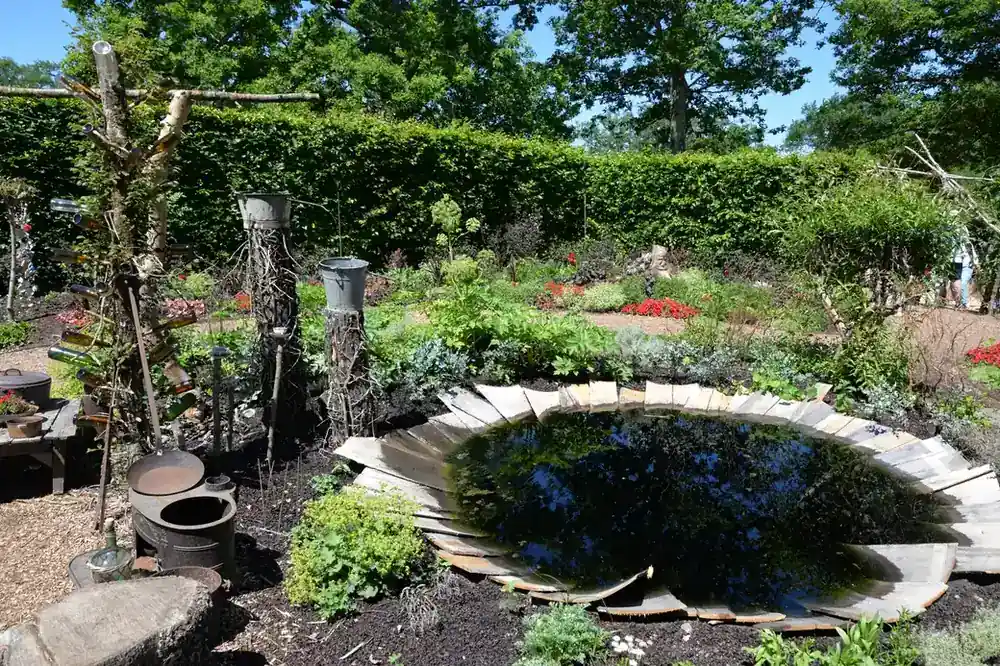
Since 1992, Domaine de Chaumont-sur-Loire has staged the Festival International des Jardins, drawing landscape architects, botanists, and visual artists from around the world to build experimental outdoor plots inside hedged clover-shaped alcoves. Every season picks a fresh unifying theme, so returning visitors never walk through the same garden twice.
Forget tidy palace lawns here. One hedged plot might sink a blackened timber boardwalk into misted ferns; the next might frame a circular water basin with weathered planks, wild medicinals, and recycled vineyard stakes. You get ideas you can actually think about, biodiversity, drought resilience, playful optical tricks, rather than pure symmetry. For classic geometric boxwood terraces, compare Chaumont with Château de Villandry downriver; for pure creative surprise, Chaumont stands alone among Loire Valley estates.
Plan at least 3 to 4 hours during festival season if you want to tour the château rooms, stables, historic English park, and all festival plots without sprinting. In winter (November through early April), the festival plots close for replanting and winter construction, which explains why adult entry drops by €5.00 (~$5.40), though the English park and permanent outdoor installations remain open for brisk river-bluff walks. Check our best time to visit the Loire Valley guide to see how Chaumont’s bloom peaks in late May through September.
Verified Admission Rates & Closing Rules
Tickets are verified through the Domaine de Chaumont-sur-Loire official portal. Notice there is no residency surcharge for non-EEA visitors.
| Season & Ticket Category | Price | Notes |
|---|---|---|
| Festival Season Adult (Apr 22, Nov 1) | €21.00 (~$22.70) | Covers Château, Park, Stables, Art & Garden Festival |
| Festival Reduced Rate | €13.00 (~$14.05) | Ages 12-18, students, job seekers, disabled visitor companion |
| Festival Child (ages 6-11) | €6.00 (~$6.50) | Children under 6 & visitors with disabilities enter Free |
| Festival Family Offer (2 Adults + 2 Kids under 12) | €42.00 (~$45.35) | Saves €12.00 (~$12.95) vs buying individual tickets |
| Off-Festival Winter Adult (Nov to Apr) | €16.00 (~$17.30) | Winter child (ages 6-11) €4.00 (~$4.30) |
| Guided Tour Add-on | +€5.00 (~$5.40) | Optional supplement on top of admission |
Chaumont can also be folded into custom Pass’Châteaux multi-monument bundles from the Blois-Chambord Tourist Office (scaling up toward ~€75.00 (~$81.00) when adding Chenonceau or Blois’s Son et Lumière alongside the core trio). Gates open daily at 10:00 AM and close only on January 1 and December 25. Keep an eye on the clock in late afternoon: ticket offices shut one full hour before posted closing (4:30 PM in winter when gates lock at 5:30 PM, and 6:00 PM-7:00 PM during long summer evenings).
Traps, Restrictions & Tourist Realities
- The 2.5 km Rail-to-Bluff Walk: Arriving by TER train at Onzain, Chaumont-sur-Loire sounds effortless on a map, yet the walk spans 2 to 2.5 kilometers across the Loire River bridge and finishes with a steady uphill climb to the château gates. Pack comfortable shoes or pre-arrange a taxi if anyone in your group dislikes steep grades.
- No Late-Afternoon Entry: Unlike monuments that sell tickets until 30 minutes before closing, Chaumont locks its ticket desk 60 minutes prior to closing time every single day.
- Winter Festival Closure: Visiting between early November and mid-April saves €5.00 (~$5.40) on adult tickets, because the seasonal International Garden Festival plots are dismantled and under redesign.
- Rural Shuttle Seasonality: The direct €3.40 (~$3.70) Azalys shuttle from Blois only runs from April 4 to November 1; off-season rail visitors depend on Onzain TER trains plus walking or local taxis.
Getting to Chaumont by Train, Car, Shuttle & Bike
Because Chaumont sits almost halfway between Blois and Amboise on the south bank of the Loire, it fits cleanly into almost any central valley route.
- By Car: Free public parking spreads around the village and estate approaches, with dedicated reduced-mobility (PMR) bays right near the southern entrance. Most festival plots and park trails roll across gently graded compacted gravel suitable for wheelchairs and strollers.
- By Train + Foot or Festival Shuttle: Direct regional TER trains connect Blois, Amboise, and Tours to Gare d’Onzain, Chaumont-sur-Loire on the north bank (check timetables on SNCF Connect). Walk 20-30 minutes across the river bridge and up the bluff road, hop a five-minute taxi, or catch seasonal festival shuttle connections.
- By Blois Bus Shuttle: From April 4 to November 1, the Azalys Châteaux Shuttle links Gare de Blois-Chambord directly to Chaumont-sur-Loire for €3.40 (~$3.70) per ride, easy to combine with getting around the Loire Valley rail passes like the Pass Rémi Découverte (€45.00 (~$48.60) for 2 days or €60.00 (~$64.80) for 3 days for up to five companions).
- By Bike (La Loire à Vélo): Cyclists riding the flagship ~39 km Blois-to-Amboise stage on La Loire à Vélo pedal right past Chaumont’s footbridge, making it the single easiest château detour on the central river trail. See route ideas on our Loire Valley bike tours guide.