Loire Valley France: Châteaux, Tickets, Itineraries & Wine Guide
Independent visitor intelligence covering 11 royal châteaux, verified entry tariffs, TGV and shuttle routes, Touraine wine tastings, and La Loire à Vélo cycling.
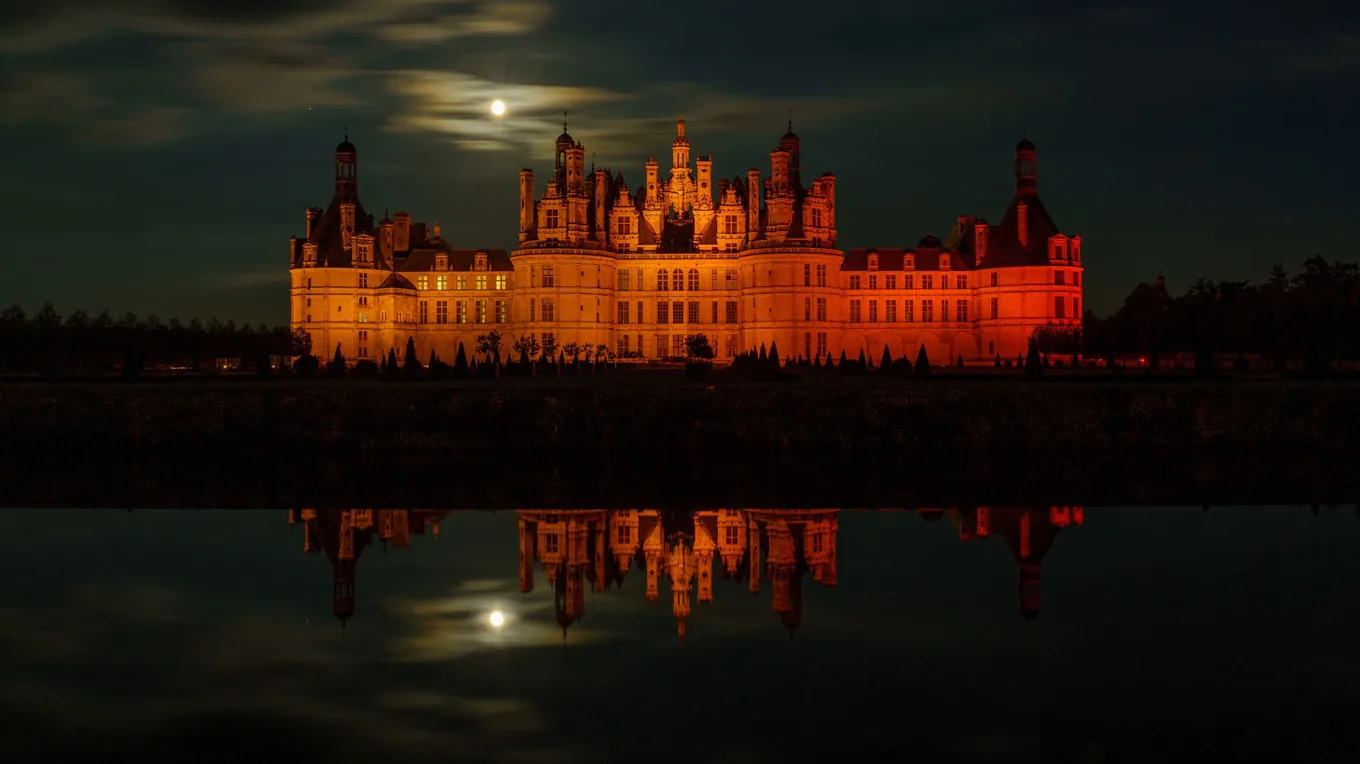
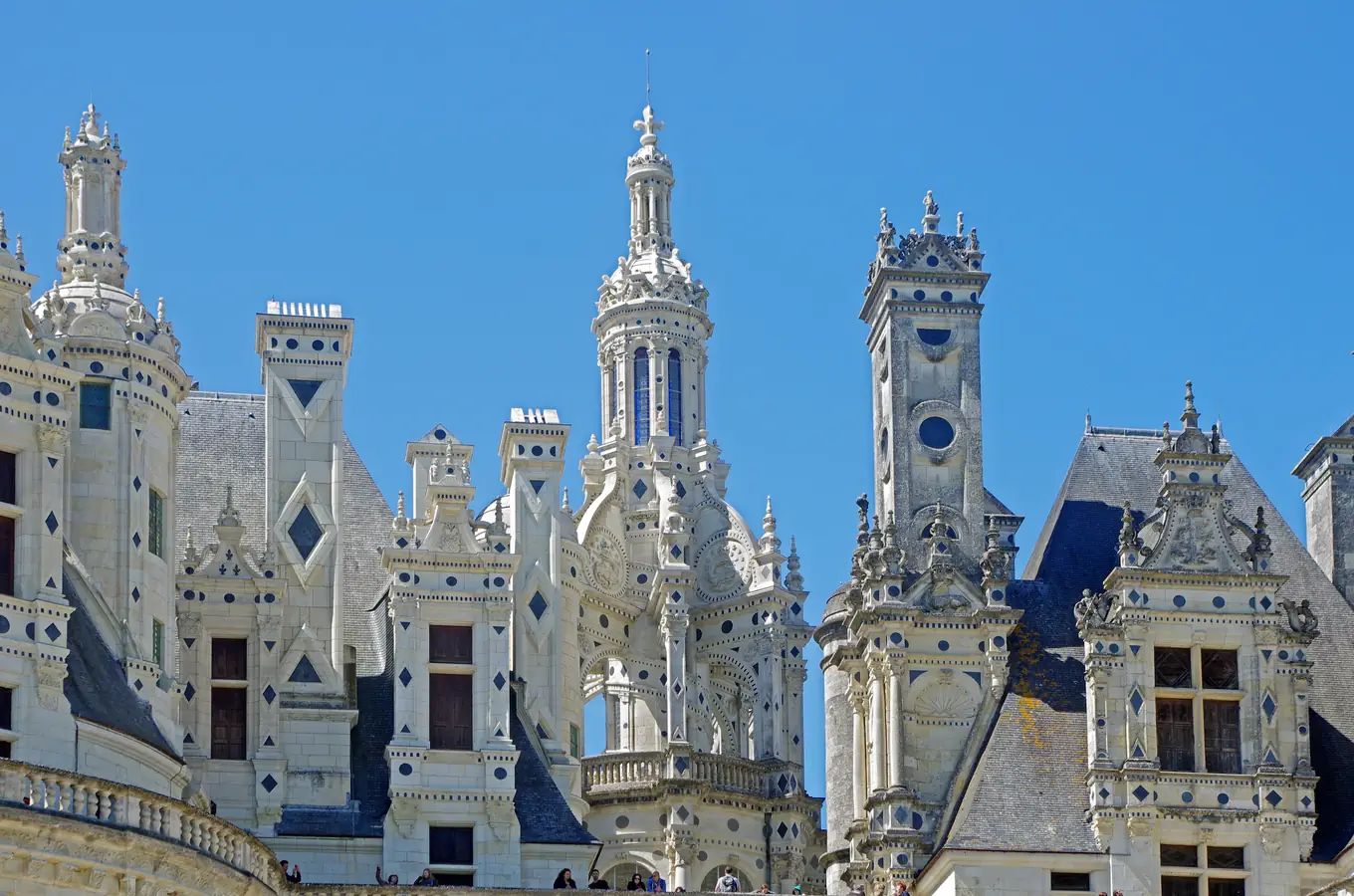
Rooftop turrets, sculpted chimneys, and central lantern tower at Château de Chambord
· Photo: Daniel Jolivet (Wikimedia (CC BY 2.0))
1h 10mParis TGV
€14-€31Castle Entry
280 kmUNESCO Corridor
Year-RoundOpen Season
Live Date & Seat Availability
From Paris: Chambord & Chenonceau Day Tour with Wine Tasting
Driving east from Angers toward Sully-sur-Loire, you quickly see why French monarchs left Paris behind. The UNESCO World Heritage Loire Valley corridor stretches 280 kilometers across Centre-Val de Loire and Pays de la Loire. Over a hundred castles, fortified manors, and troglodyte cellars pack into farmland along the Loire and three quieter tributaries (the Cher, Indre, and Vienne). That density sets a trap. Travelers picture a neat row of palaces sitting side by side, then lose half a weekend in gravel car parks or wait for sparse rural buses.
Nobody sees everything here in one trip. Honestly, forcing four castles into one afternoon turns limestone facades into a blur of stairs and souvenir shops. What works? Pick one anchor town, match your transport to the river valley you want, and book timed entry before midday tour coaches hit the gates.
This field guide pulls together verified research across 11 flagship châteaux, SNCF rail routes, AOC wine trails, and cycling stages. Every link below leads to checked prices, honest caveats, and exact gate rules.
KEY TAKEAWAYS
Essential Logistics & Takeaways
The Core Pair:Château de Chambord (€31.00 / ~$33.50 non-EEA; €21.00 / ~$22.70 EEA) and Château de Chenonceau (€19.00 / ~$20.50 leaflet) top first-time lists, though lines peak hard from 11:00 AM to 3:30 PM.
Best Rail-Only Route: Sleep in Tours or Amboise to reach Blois, Amboise, Clos Lucé, Chenonceau, and Azay-le-Rideau by SNCF TER train without a rental car.
Watch the Rules: Chenonceau confiscates outside food at the gate, Cheverny sells individual tickets on-site only, and winter booths lock 45 to 60 minutes before closing.
Verified Tour Benchmarks & Entry Passes
Before building a rail or driving plan, check what organized operators charge when they bundle transport, timed entry, and wine tastings. For solo travelers or couples based in Paris, a coach tour often undercuts peak TGV tickets plus shuttles and two gate fees. Compare our four flagship benchmarks below, or browse all 16 vetted options in the Loire Valley tickets and tours directory.
INDEPENDENT OPERATOR BENCHMARKS
Loire Valley: Top 4 Tours & Tickets Compared
Benchmarked by verified pricing, duration, departure point, and cancellation flexibility.
Viator Bestseller
★ 4.7 (4127)Viator
Loire Valley Castles Day Trip from Paris with Wine Tasting
Viator Verified Partner
€143 (~$155)/ person
24h Free Cancellation
Duration13 hours
DepartureCentral Paris (Coach Departure)
HighlightsSkip-the-line Chambord & Chenonceau entry, Blois free time, Chenonceau wine tasting, English-speaking tour leader
#1 Best-Selling from Paris
★ 4.8 (4820)GetYourGuide
From Paris: Fairytale Loire Castles (Chambord & Chenonceau) with Wine Tasting
Look closely at those departure hubs. Coach excursions from central Paris run €107.00 (~$115.00) to €143.44 (~$154.91) for a 12- to 13-hour loop covering Chambord and Chenonceau. That works well if you have just one spare day in France. Stay overnight in Tours, Saint-Pierre-des-Corps, or Amboise instead, and local small-group minivan tours run €161.22 (~$174.12) for a four-hour Touraine wine route or €249.00 (~$268.00) for a full-day castle-and-lunch circuit without the highway slog.
Geography of the 280-Kilometer UNESCO Corridor
Inscribed on the UNESCO World Heritage List in 2000 (Reference 933bis, after Chambord gained individual status in 1981), this cultural landscape crosses four departments: Loiret, Loir-et-Cher, Indre-et-Loire, and Maine-et-Loire. Rather than one straight line, the region breaks into three natural zones that dictate where you sleep. Inspect exact point-to-point distances on our Loire Valley castles map guide.
UNESCO Corridor & Transit Atlas
Loire Valley Châteaux, Rail Hubs & Wine Towns Map
Interactive map of all 11 flagship châteaux, major SNCF TGV/TER stations, and Vouvray, Chinon, and Saumur AOC wine hubs.
Coordinates verified against official monument portals and SNCF station records. Click any marker to view tariffs, transit notes, and the full guide.
On the eastern edge near Blois and the Sologne woods sit Chambord, Cheverny, and Chaumont-sur-Loire. Central Touraine clusters around Amboise, Tours, and the Cher and Indre valleys, putting Chenonceau, Clos Lucé, Villandry, Azay-le-Rideau, and Ussé close together. West in Anjou, Angers and Saumur trade pastel symmetry for dark schist ramparts and deep limestone wine caves.
The 11 Flagship Châteaux Compared
Visitors always ask which single castle stands above the rest. There is no simple winner. A hunting palace built to intimidate rival ambassadors feels nothing like a furnished 17th-century manor or a riverside bridge gallery. Read our ranked breakdown on the best Loire Valley châteaux hub, or jump straight to the estates that fit your trip.
Royal Icons: Chambord and Chenonceau
Commissioned in 1519 by King François I inside the walled Sologne forest, the Domaine national de Chambord relies on sheer scale: 440 rooms, massive round corner towers, and a skyline bristling with carved chimneys. Its famous double-helix staircase lets two people climb and descend separate spiral flights without ever meeting, a layout linked to Leonardo da Vinci. One honest warning? François I barely slept here, so most rooms feel remarkably bare inside. Non-EEA adults pay €31.00 (~$33.50) while EEA citizens and residents pay €21.00 (~$22.70), with free entry for everyone under 18 and 18-to-25 EEA residents. Drivers pay €8.00 (~$8.65) daily in lots P0, P2, or P3 (€15.00 / ~$16.20 for campervans). Check shuttle connections and terrace tips in our Château de Chambord guide.
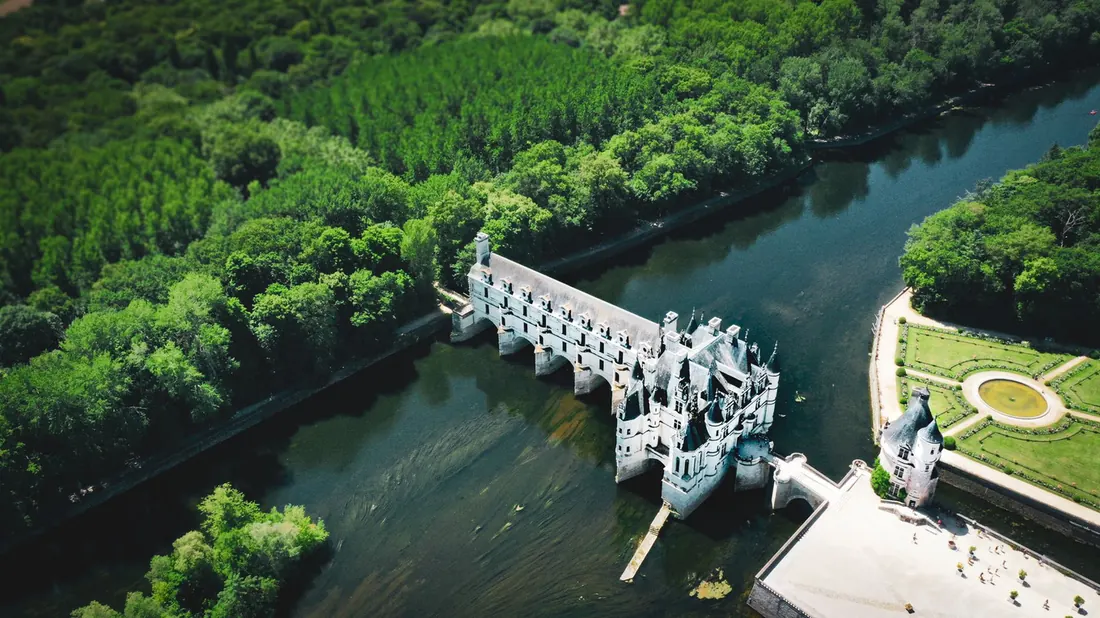
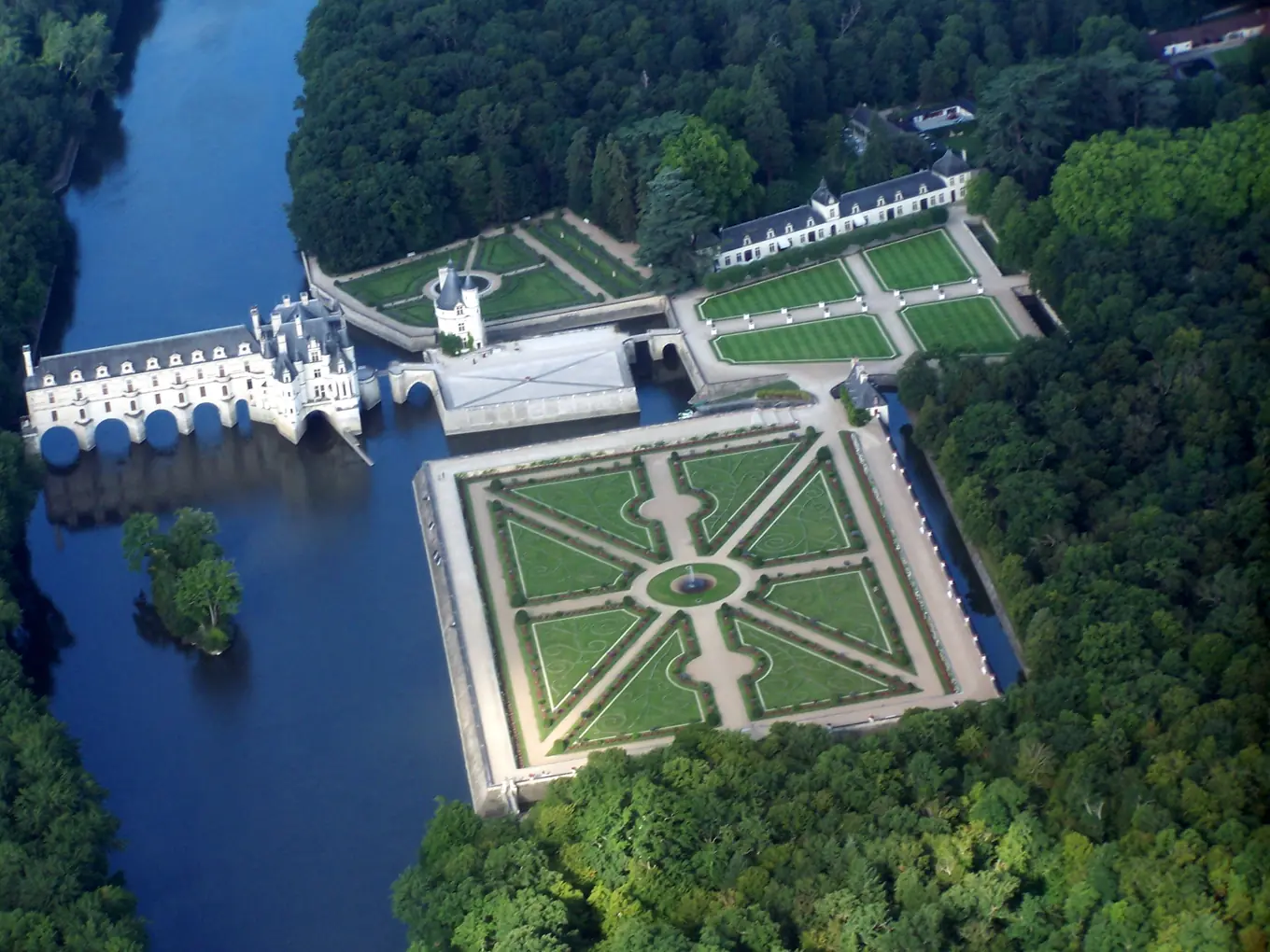
Aerial perspective of Château de Chenonceau bridging the River Cher, flanked by forest canopy and formal riverside parterres.
· Photo: Spsergio (Wikimedia (CC BY-SA 3.0))
Where Chambord overwhelms with cold stone, Château de Chenonceau feels intimate and lived-in. Known as the Ladies’ Castle, it owes its signature silhouette to Diane de Poitiers, who commissioned the five-arch stone bridge across the River Cher, and Queen Catherine de’ Medici, who evicted Diane and built a 60-meter gallery overhead. Fresh seasonal bouquets fill furnished chambers and vaulted river kitchens. Adult entry costs €19.00 (~$20.50) with a leaflet or €24.00 (~$25.90) with an audioguide, parking is free, and the gates stay open 365 days a year. Just leave snacks in the car or your daypack at the station locker: security inspects bags and blocks all outside food. See train arrival details (Gare de Chenonceaux sits 400 meters from the gate) in our Château de Chenonceau visitor guide.
The Amboise & Blois Royal Axis
Upriver from Tours, two historic towns hold more royal intrigue per block than anywhere else in Touraine. High on a limestone spur above the Loire, Château Royal d’Amboise served Charles VIII and François I before later demolitions trimmed its footprint. What survives earns every euro of the €17.30 (~$18.70) ticket (12-language HistoPad included): sweeping valley terraces, the wide Tour des Minimes equestrian ramp, and the Flamboyant Gothic Chapel of Saint-Hubert housing Leonardo da Vinci’s tomb. No general visitor lot sits at the gate, so drivers use riverfront town lots (one hour free daily), while wheelchair users with an official disability card can access a private intercom gate on Rue Augustin Thierry.
Ten minutes southeast on foot sits Château du Clos Lucé, the pink-brick manor where Leonardo da Vinci spent his final years from 1516 to 1519. If children or non-history buffs are starting to glaze over, go here. Upstairs rooms recreate Leonardo’s bedchamber and studio, modern galleries examine his engineering notes, and the wooded park displays 40 full-scale wooden models of his bridges, tanks, and flying machines. Adult tickets cost €20.00 (~$21.60), with a €60.00 (~$64.80) family rate covering two adults and two youths aged 7 to 18.
Half an hour east by train, Château Royal de Blois packs four centuries of French architecture around one central courtyard: a 13th-century medieval hall, Louis XII’s brick gallery, François I’s carved spiral staircase, and François Mansart’s Classical wing. Seven kings and ten queens stayed here; in 1588, Henri III had the Duke of Guise assassinated right inside the royal apartments. Entry runs €16.00 (~$17.30) including the HistoPad (plus €13.00 / ~$14.05 for the seasonal evening Son et Lumière show), just steps from Gare de Blois-Chambord.
Garden Showpieces & Lived-In Estates
If aristocratic portraits blur together for you, head toward manicured boxwood or inhabited country estates. Completed in 1532 by Finance Minister Jean Le Breton, Château de Villandry was the last major Renaissance palace built on the Loire, yet its gardens steal the spotlight. Early 20th-century owners Joachim Carvallo and Ann Coleman restored six terraced levels anchored by the geometric Potager vegetable garden and the Ornamental Love Garden. Want to save time or euros? Buy a gardens-only pass for €8.50 (~$9.20) instead of the €14.00 (~$15.10) full ticket, especially in January or late November when the château interior closes for maintenance while the gardens stay open.
South of Blois, Château de Cheverny flips the script on Chambord’s empty halls. Held by the Hurault family for over six centuries, this pale Bourré-limestone palace in Louis XIII Classical style bursts with period tapestries, painted beams, and family portraits. Comic fans recognize its symmetrical facade as Hergé’s model for Marlinspike Hall in The Adventures of Tintin. Base admission costs €15.50 (~$16.75), or €20.50 (~$22.15) including the 700-square-meter Tintin exhibition, sold strictly on-site at the castle desk. Free visitor parking spans zones P1, P2 (with EV chargers), and daytime P3 for campervans, and the estate opens 365 days a year.
Between Blois and Amboise on a dramatic bluff, Domaine de Chaumont-sur-Loire links Renaissance court drama (Catherine de’ Medici forced Diane de Poitiers to swap Chenonceau for Chaumont in 1559, before Princesse de Broglie modernized the stables and park during the Belle Époque) with contemporary art. From April 22 to November 1, its International Garden Festival transforms the grounds into dozens of bold landscape plots. Admission runs €21.00 (~$22.70) during festival months and €16.00 (~$17.30) in winter, with free village parking or a 2-to-2.5-kilometer walk across the Loire bridge from Gare d’Onzain.
Western Fairytale Turrets & Medieval Might
Travel west of Tours along the Indre and Maine rivers and the tour buses thin out fast. Built on an island in the Indre between 1518 and 1527, Château d’Azay-le-Rideau pairs mirror-like water reflections with an Italian-inspired escalier d’honneur grand staircase. Managed by France’s Centre des monuments nationaux (CMN), it charges €16.00 (~$17.30) in summer (April through September) and €13.00 (~$14.05) in winter, with zero non-EEA surcharge.
Downriver beside the Chinon forest, the white tuffeau turrets of Château d’Ussé inspired Charles Perrault’s Sleeping Beauty. Adult entry is €15.50 (~$16.75) with free parking outside the gate, though note that Ussé closes completely from mid-November until early February. Further west, a 90-minute TGV ride from Paris reaches Château d’Angers, where 17 banded black-schist and white-tuffeau towers guard the Maine River. Inside sits a climate-controlled gallery holding the 14th-century Apocalypse woven cycle, stretching over 100 meters as the oldest surviving medieval cycle of its kind. Summer admission costs €14.00 (~$15.10) (€11.00 / ~$11.90 in winter), or €24.00 (~$25.90) / €20.00 (~$21.60) on a joint CMN ticket paired with Azay-le-Rideau.
Getting Here & Moving Between Castles
Transport choices matter more here than which castle you pick first. On a map, Paris looks close. In practice, poor rural connections punish travelers who wing it without checking train or shuttle times. Review exact station transfers in our getting there and transport guide and Paris to Loire Valley day trips breakdown.
High-speed TGV Inoui trains booked on SNCF Connect link Paris Montparnasse to Gare de Saint-Pierre-des-Corps in as little as 57 minutes, followed by a five-minute TER shuttle into central Gare de Tours (~1 hour 21 minutes total). Direct TGVs also reach Gare d’Angers Saint-Laud in 1 hour 21 to 1 hour 35 minutes, eight minutes on foot from Château d’Angers. From Paris Austerlitz, regional TER and Intercités trains serve Gare de Blois-Chambord (from 1 hour 24 minutes) and Gare d’Amboise (1 hour 43 minutes to 2 hours 15 minutes).
Can you visit car-free? Yes, provided you stick to rail-friendly sites. Gare de Chenonceaux sits 400 meters from Chenonceau (25 to 30 minutes from Tours), Azay-le-Rideau is a 30-to-35-minute TER ride from Tours, and Blois plus Amboise are easy walks from their platforms. Even Villandry works by public transit if you ride Tours Tram Line A to Fac 2 Lions and switch onto Fil Bleu Bus 32 (Monday to Saturday) or reserve on-demand Résabus R5 the day prior. To reach Chambord without driving, catch the year-round Rémi 41 Line 2 “Navette Châteaux” bus outside Blois-Chambord station for €3.40 (~$3.70) per boarding (cash or contactless card). These buses carry up to eight standard bikes first-come, first-served, though tandems and cargo bikes cannot board. Between April 4 and November 1, Azalys shuttles also connect Blois to Cheverny and Chaumont-sur-Loire at the same €3.40 (~$3.70) fare. Traveling with family or friends? The Pass Rémi Découverte covers up to five riders together on regional TER trains and Rémi buses for €45.00 (~$48.60) over two days or €60.00 (~$64.80) over three days, while the Pass Rémi Découverte Plus extends access to Île-de-France border lines for €95.00 (~$102.60) or €120.00 (~$129.60).
Renting a car in Tours or Saint-Pierre-des-Corps still wins if you plan to link Villandry, Azay-le-Rideau, Ussé, Chinon cellars, and Cheverny in one sweep, because rural buses between those southern valleys run infrequently. Keep parking fees in mind before picking a rental over trains: Chambord charges €8.00 (~$8.65) per day and Azay-le-Rideau’s municipal Interparking Château runs €4.00 (~$4.30) for two hours, whereas Chenonceau, Villandry, Cheverny, Chaumont, and Ussé include free visitor parking. Book early if you require an automatic gearbox, since manual cars dominate regional rental lots.
Loire Wine Cellars, Gastronomy & Base Towns
Wine here is woven straight into the geology. Quarrying soft tuffeau stone for royal facades left miles of cool underground tunnels that local winemakers turned into aging cellars. Across 280 kilometers, the river shifts cleanly from chalky Touraine whites to structured western reds. Compare appellations and cellar formats in our Loire Valley wine tours and tasting guide.
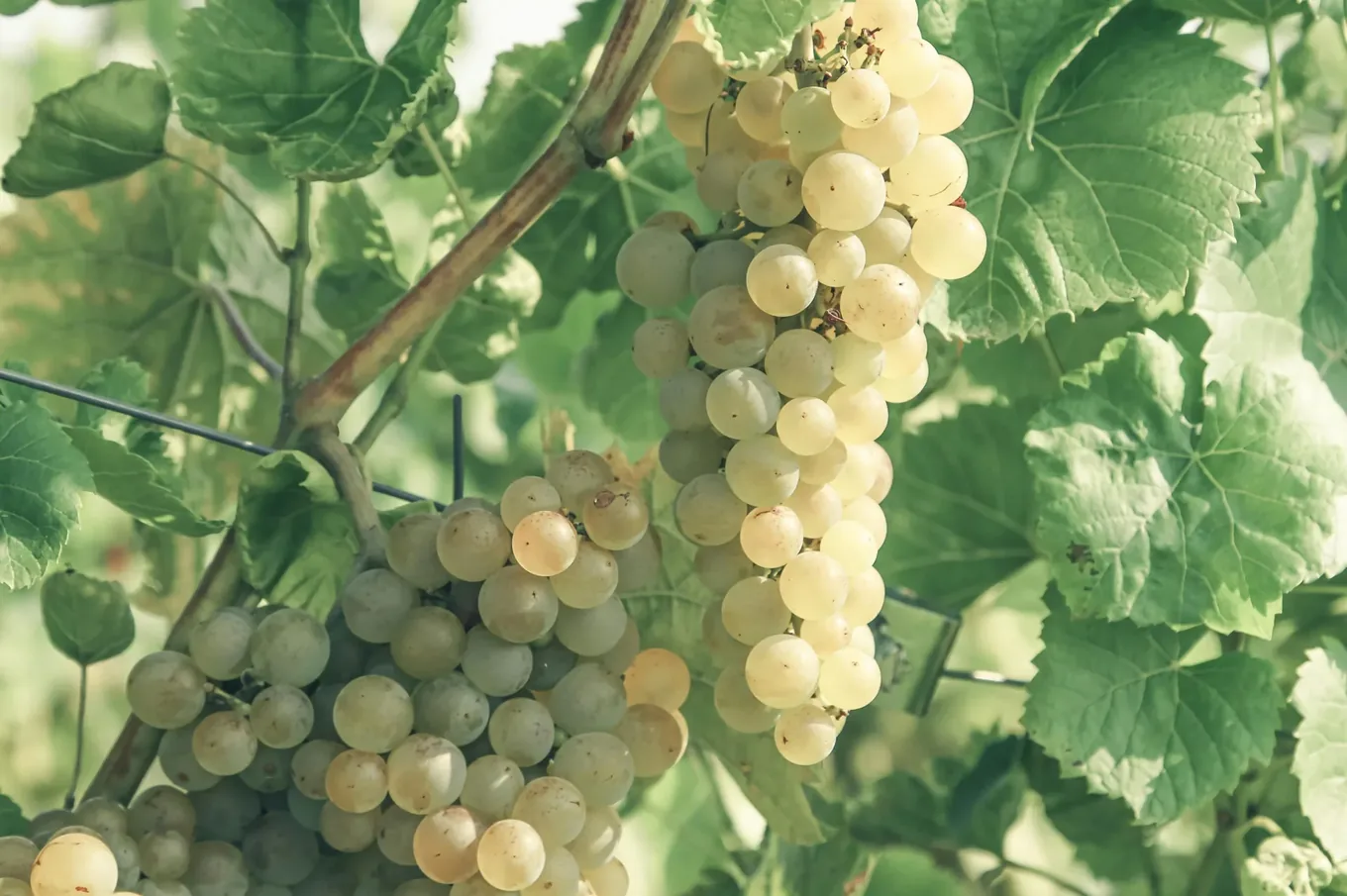
Ripe white wine grape clusters ripening on trained vines in the Loire Valley, where Chenin Blanc anchors Vouvray and Montlouis-sur-Loire.
· Photo: Wikimedia / Archive Contributor (Creative Commons CC-BY-SA)
Just east of Tours, Vouvray AOC and Montlouis-sur-Loire AOC display Chenin Blanc across four distinct styles: crisp sparkling (fines bulles), bone-dry sec, off-dry demi-sec, and honeyed moelleux. Walk into Amboise’s hillside at Caves Ambacia for a 90-minute 15th-century cellar tour and six-wine tasting (€35.58 / ~$38.43), or join a half-day Touraine minivan loop from Tours or Amboise (€161.22 / ~$174.12). Southwest around Chinon and Bourgueil, Cabernet Franc produces peppery, red-currant reds with cool graphite minerality, while Saumur anchors sparkling Crémant de Loire and Saumur-Champigny cuvées.
At lunch, look for pike-perch (sandre) in beurre blanc sauce, slow-cooked rillettes de Tours, ash-coated goat cheeses (Sainte-Maure-de-Touraine, Selles-sur-Cher), and Sologne-born tarte tatin. Picking the right base town makes dinner and evening strolls effortless. Read our where to stay and château hotels guide to compare Amboise (most walkable small-town charm), Tours (strongest rail hub and late dining around Place Plumereau), Blois (closest base for Chambord and Cheverny), plus quieter wine towns Saumur and Chinon.
Cycling La Loire à Vélo & Pacing Your Trip
Few valleys in Europe treat cyclists this well. Spanning 900 kilometers in total (630 kilometers along the main spine from Cuffy/Nevers to Saint-Brevin-les-Pins on the Atlantic, plus 270 kilometers of castle loops), La Loire à Vélo forms the western leg of EuroVelo 6. Flat river dikes, paved voies vertes, and quiet country lanes suit casual riders and families on e-bikes. Map out stage lengths and one-way rentals in our Loire Valley bike tours guide.
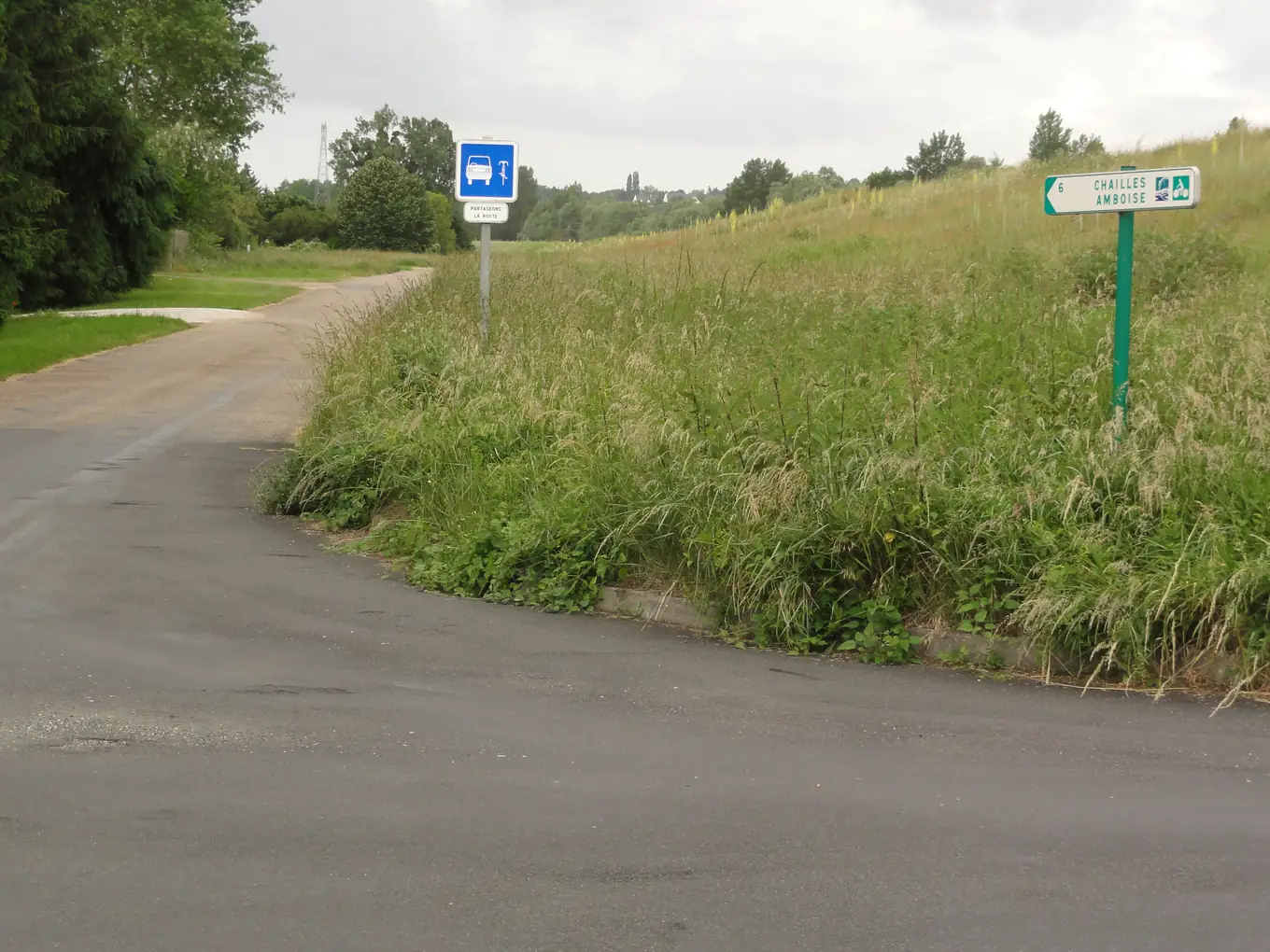
Signed paved section of La Loire à Vélo near Blois pointing riders toward Chailles and Amboise along the flat river corridor.
· Photo: Havang(nl) (Wikimedia (CC0))
Most visitors ride central Touraine rather than the whole river. Blois to Amboise measures roughly 39 kilometers past Chaumont-sur-Loire (add 15 kilometers for a Chambord loop), Amboise to Tours covers 24 kilometers past Vouvray and Montlouis vines, and Tours to Saumur spans 72 kilometers linking Villandry, Azay-le-Rideau, Ussé, Chinon, and Candes-Saint-Martin. Accueil Vélo rental shops allow one-way pickups in Blois or Amboise with drop-offs downriver. Standard bikes ride free on off-peak Rémi TER trains outside 7:00-9:00 AM and 5:00-7:00 PM weekday peaks; from May through September, Train Vélo Loire carriages require a compulsory ~€1.00 (~$1.10) bike reservation, and you must remove all panniers before boarding.
How long should you stay? One day from Paris covers Chambord and Chenonceau, two days adds Amboise or Blois cleanly, and three to five days leaves space for Villandry, a cellar tasting, and a riverside ride. Test day-by-day plans in our Loire Valley itineraries guide and check seasonal timing in our best time to visit calendar. Spring brings tulip beds at Villandry and Chaumont’s Garden Festival; July and August bring late 7:00 PM-8:00 PM closings alongside heavy midday lines; September and October deliver golden vendanges harvests; and late November through early January stages Noël au Pays des Châteaux holiday displays across seven Touraine monuments.
Visitor Rules, Passes & Avoiding Common Traps
Entrance rules shift from estate to estate because some castles belong to the state, others to foundations, and several remain private homes. Check our visitor rules and consumer tips guide (and our verification standards on our about page) before buying passes or packing lunch.
RED FLAGS & WHAT TO AVOID
Traps, Restrictions & Tourist Realities
Non-EEA Chambord Surcharge: Non-EEA adults pay €31.00 (~$33.50) at Chambord versus €21.00 (~$22.70) for EEA residents, and non-EEA visitors aged 18-25 do not receive free youth admission at Chambord, Angers, or Azay-le-Rideau. Carry original passports or residency proof.
Chenonceau Gate Food Ban: Bag security bars all outside food and picnics past Chenonceau’s ticket barriers, even crêpes bought outside the gate.
Early Last-Entry Cutoffs: Ticket desks at Azay-le-Rideau, Clos Lucé, Chaumont, and Ussé close 45 to 60 minutes before posted closing times (30 minutes early at Chambord, Chenonceau, Blois, and Villandry).
Station & Queue Pickpockets: Guard zipped bags at Paris Montparnasse, Paris Austerlitz, Saint-Pierre-des-Corps, and busy summer ticket lines at Chenonceau.
Multi-castle passes also require quick math before purchase. The Blois-Chambord Pass’Châteaux starts around €47.50 (~$51.30) for three monuments such as Blois, Chambord, and Cheverny (climbing toward ~€75.00 / ~$81.00 when adding Chenonceau or Chaumont), paying off only if you visit every included site within your trip window. First-Sunday free winter entry (November through March) applies at state CMN sites like Angers and Azay-le-Rideau, never privately run Chenonceau or Cheverny. Accessibility varies just as widely: Chenonceau provides entrance ramps and an interior lift across primary gallery levels, Angers equips its Apocalypse gallery with a paved ramp and platform lift, while Chambord’s upper terraces and Ussé’s keep tower rely strictly on spiral stone staircases. Lock in timed entry for your top two castles, travel light between valleys, and keep one afternoon free beside the river.
Frequently Asked Questions
Chambord vs Chenonceau: which Loire Valley château should you prioritize first?+
Pick Chenonceau (€19.00 / ~$20.50 leaflet; €24.00 / ~$25.90 audioguide) if you want lived-in furnished rooms, floral displays, and a five-arch gallery crossing the River Cher. Choose Chambord (€31.00 / ~$33.50 non-EEA adult; €21.00 / ~$22.70 EEA) for monumental Renaissance scale, rooftop lantern terraces, and the double-helix staircase, keeping in mind its rooms remain sparsely furnished.
Paris day trip coach vs DIY TGV train: which works better for one day?+
An organized coach tour from Paris (€107.00 to €143.44 / ~$115.00 to $154.91) beats DIY rail when you want both Chambord and Chenonceau in a single 12-hour day without juggling bus timetables. Take a DIY TGV from Paris Montparnasse to Saint-Pierre-des-Corps (as fast as 57 minutes) if you prefer deeper time at one rail-linked estate like Blois, Amboise, or Chenonceau.
Rental car vs car-free train and shuttle: which gets you to more châteaux?+
A rental car wins for multi-castle rural loops linking Villandry, Azay-le-Rideau, Ussé, and Cheverny on your own clock, though automatic vehicles require early booking. Car-free travelers can still cover Blois, Amboise, Clos Lucé, Chenonceau, and Angers directly by TER train, plus Chambord via the year-round €3.40 (~$3.70) Rémi Line 2 shuttle.
Amboise vs Tours vs Blois: which base town is best for exploring the Loire?+
Amboise is the strongest atmospheric base if you want walkable cafés, Leonardo da Vinci’s final manor, and direct TER links toward Tours and Blois. Tours excels for car-free day-trippers needing frequent rail connections to Chenonceau and Azay-le-Rideau, while Blois makes sense if Chambord, Cheverny, and Chaumont sit at the top of your list.
Pass'Châteaux vs individual tickets: which option actually saves money?+
Individual gate tickets make more sense if you plan to visit only one or two major monuments, especially since Chenonceau and Chambord sit in different pass tiers. The Blois-Chambord Pass’Châteaux (~€47.50 / ~$51.30 for Blois, Chambord, and Cheverny) pays off only once you bundle three or more participating eastern estates and confirm your non-EEA vs EEA eligibility.
Loire Valley Tickets & ToursCompare verified rates

 Viator Bestseller